India has more than a hundred types of saree, and many are named after the town that weaves them. Kanchipuram silk from Tamil Nadu, Banarasi from Varanasi, Paithani from Maharashtra, Patola from Gujarat and Pochampally ikat from Telangana are some well-known examples. The Development Commissioner for Handlooms, the Ministry of Textiles office for the sector, lists 116 handloom sarees. By March 2026, India's register of geographical indications had 46 names with the word saree in them. Below is a selection, state by state, with what each saree is made of and what to look for, and then how to read a saree listing.
A geographical indication, or GI, ties a product's name to the place that makes it, as what a GI tag is and what it protects explains. The years below are when each name was registered.
Sarees of Tamil Nadu
Kanchipuram silk is woven in Kanchipuram, about 70 km from Chennai, from mulberry silk and gold zari. The India Handloom Brand calls it the heaviest of the silk sarees. The border is often a contrast colour, woven in by a method called korvai. A contrast pallu is woven on a separate set of threads and joined to the body, and the India Handloom Brand's sheet says trimmed ends can be seen at the join. The name was registered as Kancheepuram Silk in 2005.
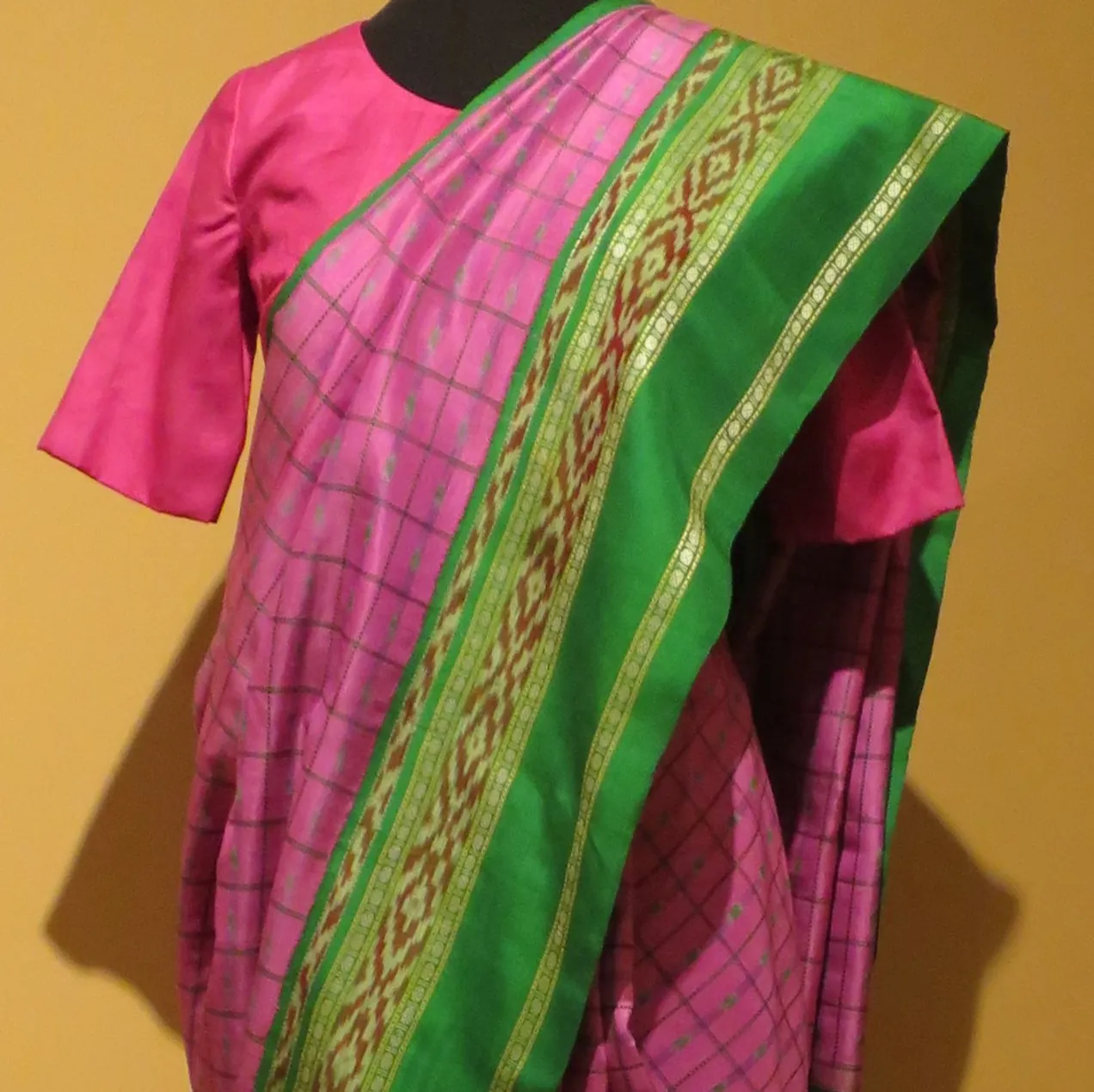 Photo: Hiart, CC0 1.0, Wikimedia Commons.
Chettinad cotton sarees come from Karaikudi in Sivaganga district. They look heavy for cotton, with broad borders and bold stripes and checks. Their GI, from 2019, uses another name for the same saree: Kandangi Saree.
Sarees of Karnataka
Mysore silk is made by the Karnataka Silk Industries Corporation, or KSIC, a state government company whose Mysore weaving factory was set up by the Maharaja of Mysore in 1912. KSIC says its sarees are pure silk with pure gold zari. It stamps a unique code number and a hologram on each of its zari sarees, and it holds the Mysore Silk GI as sole proprietor.
Ilkal, near Bagalkot, weaves sarees in silk and cotton or in pure silk. The pallu is joined to the body with a row of loops called tope teni, which you can see on the back, and the traditional colours are red, green and yellow. Molakalmuru, in Chitradurga district, weaves silk sarees with the border and pallu in one colour and the body in another. Their GIs date from 2007 and 2008.
Sarees of Kerala
Balaramapuram, near Thiruvananthapuram, weaves a white cotton saree with a gold border. It is made of fine unbleached cotton with kasavu, the Malayalam word for zari, and its designs look the same on both sides of the cloth. Its GI dates from 2010.
Sarees of Andhra Pradesh and Telangana
Pochampally, about 50 km from Hyderabad, weaves ikat. The yarn is tied and dyed in the pattern before it goes on the loom, which gives bold geometric designs with slightly hazy edges. The colours are just as strong on the back of the saree, while a printed copy is paler there.
Gadwal's traditional saree has a cotton body and a silk border and pallu, joined by interlocking the threads during weaving. Look for those joins, down the length at the border and across at the pallu. Narayanpet weaves fine cotton sarees checked all over, with a temple motif in the border. Both towns are in Telangana, with GIs from 2010 and 2013.
In Andhra Pradesh, Uppada, near Kakinada, weaves jamdani. The motifs are added with extra threads as the plain cloth is woven, so they cannot be pulled out. On the back you can see the design thread turn at the edge of each motif. Mangalagiri, near Vijayawada, weaves compact cotton sarees with a zari border called the Nizam border and no motifs on the body. Venkatagiri, near Nellore, weaves light, fine cotton, and Dharmavaram, in Anantapur district, weaves silk with a lot of gold zari. All four have GIs, registered between 2009 and 2014.
Sarees of Maharashtra and Gujarat
Paithani, from Paithan in the Marathwada region, is a heavy silk saree with zari and patterns such as peacocks, parrots and flowers. Short lengths of coloured thread go back and forth only as far as each part of the design and lock into the next colour. No thread runs straight across the saree, so none can be pulled out. Imitation gold and silver zari is now used to bring the price down, so ask which kind you are buying. Paithani's GI dates from 2010.
Patan, in Gujarat, weaves patola in double ikat: both sets of threads, along the saree and across it, are tied and dyed before weaving. Its GI, from 2013, is held by the Patan Double Ikat Patola Weavers Association. Weavers in Rajkot make simpler single and double ikat silk sarees that cost less, and Rajkot Patola is a separate GI, from 2018.
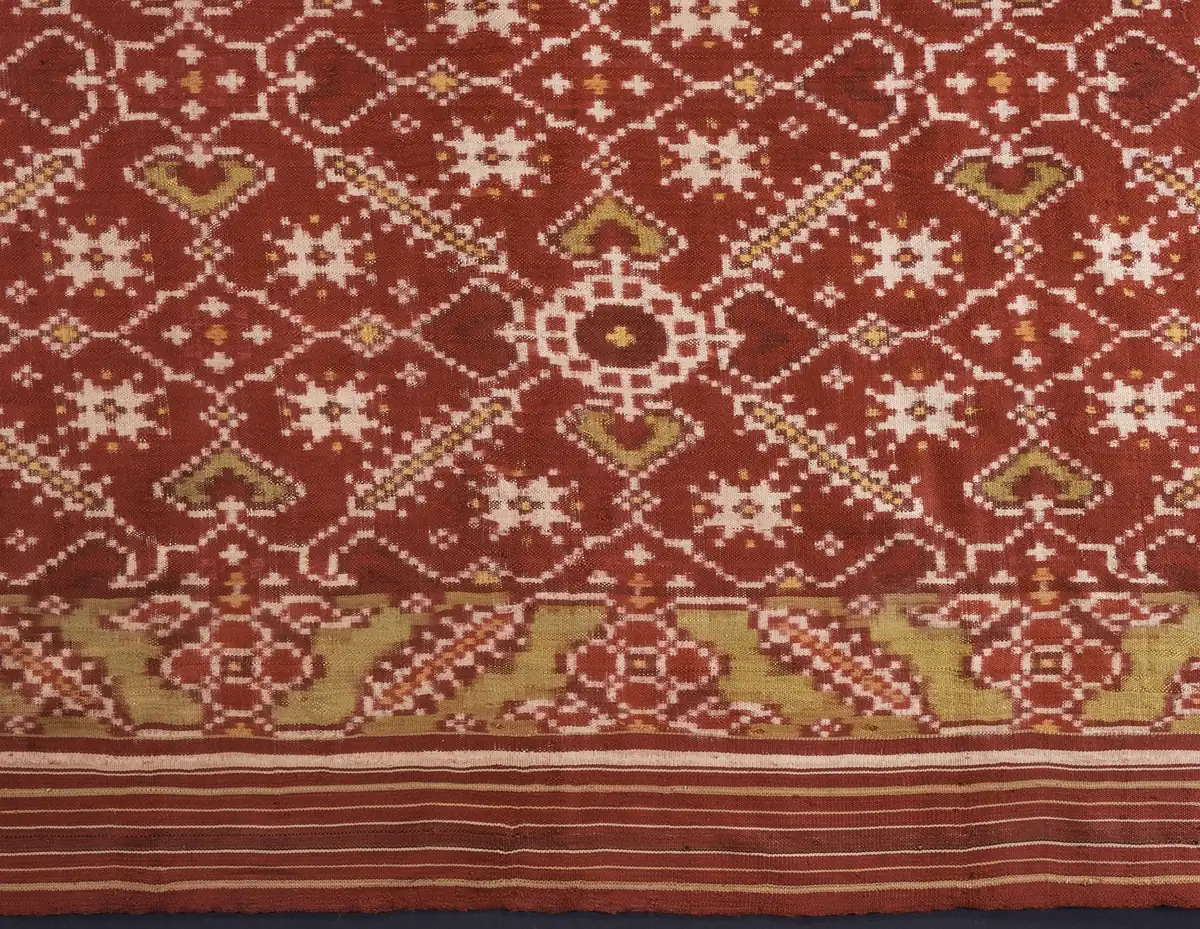 Photo: Los Angeles County Museum of Art, public domain, Wikimedia Commons.
Sarees of Rajasthan and Madhya Pradesh
Kota Doria, from the Hadoti region around Kota, is a light, open saree of cotton and silk woven in small square checks called khat. A good one has 300 to 350 checks across its width. Its GI dates from 2005.
Chanderi, in Madhya Pradesh, is a sheer, light saree of silk and cotton with zari in the border, and its GI also dates from 2005. Maheshwari sarees, from Maheshwar, mix silk and cotton the same way but are heavier, and their border design usually looks the same on both sides. Their GI dates from 2012.
Banarasi sarees from Varanasi
Brocade is the speciality of Banaras: silk woven with gold or silver zari into Mughal-inspired floral and leaf patterns, which makes the saree heavy. The Development Commissioner's saree list also names tanchoi, jungla, butidar and cutwork sarees from Varanasi. The India Handloom Brand's product sheet says a Banaras brocade has no loose lengths of thread lying across the front or the back. The GI Banaras Brocades and Sarees dates from 2009.
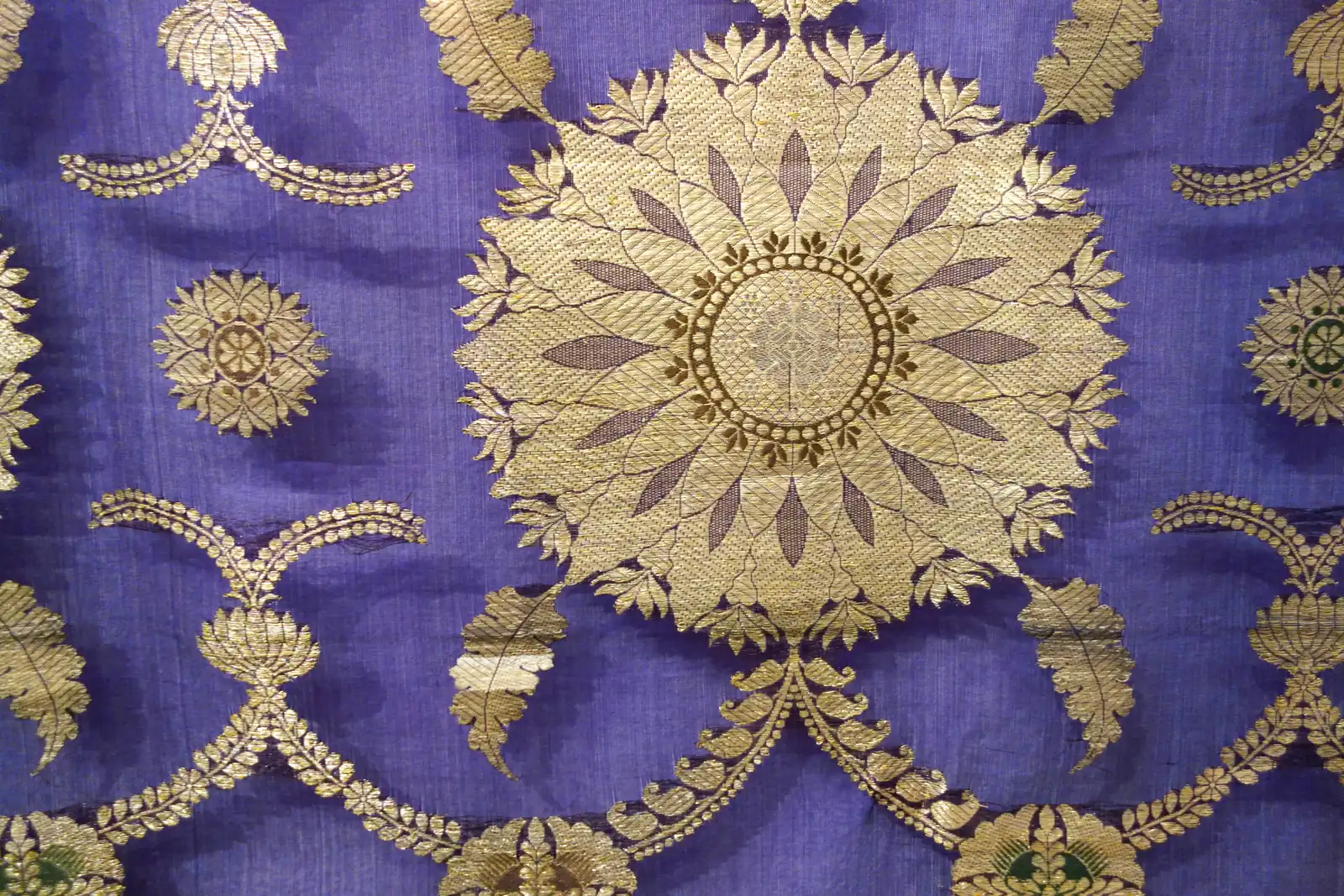 Photo: Daderot, CC0 1.0, Wikimedia Commons.
Sarees of West Bengal
Baluchari is named after Baluchar in Murshidabad district and is woven today in Bishnupur. It is a silk saree whose long pallu tells stories in boxes, such as scenes from the Ramayana, with the motifs outlined in white. The designs are in silk thread, with no zari. Its GI dates from 2012.
Shantipur, in Nadia district, and Dhaniakhali, in Hooghly district, weave fine cotton sarees. Shantipur's borders carry named patterns such as bhomra and rajmahal, and Dhaniakhali has broad contrast borders, often red or black. Tangail sarees are named after Tangail, a district in Bangladesh. Weavers from there settled in West Bengal, in places such as Fulia and Shantipur, and India registered Tangail Saree of Bengal as a GI in January 2024.
Sarees of Odisha
Odisha's ikat is called bandha. Bargarh district is famous for it, and Sonepur and Bolangir weave it too. The front and the back have the same design and colour. Its patterns are usually flowing and floral, with shaded colours, while Pochampally and Patola ikat are geometric. The GI Sambalpuri Bandha Saree and Fabrics dates from 2012. So does Bomkai, which began in Ganjam district and was later taken up in Sonepur. It has a contrast border and pallu in bright colours.
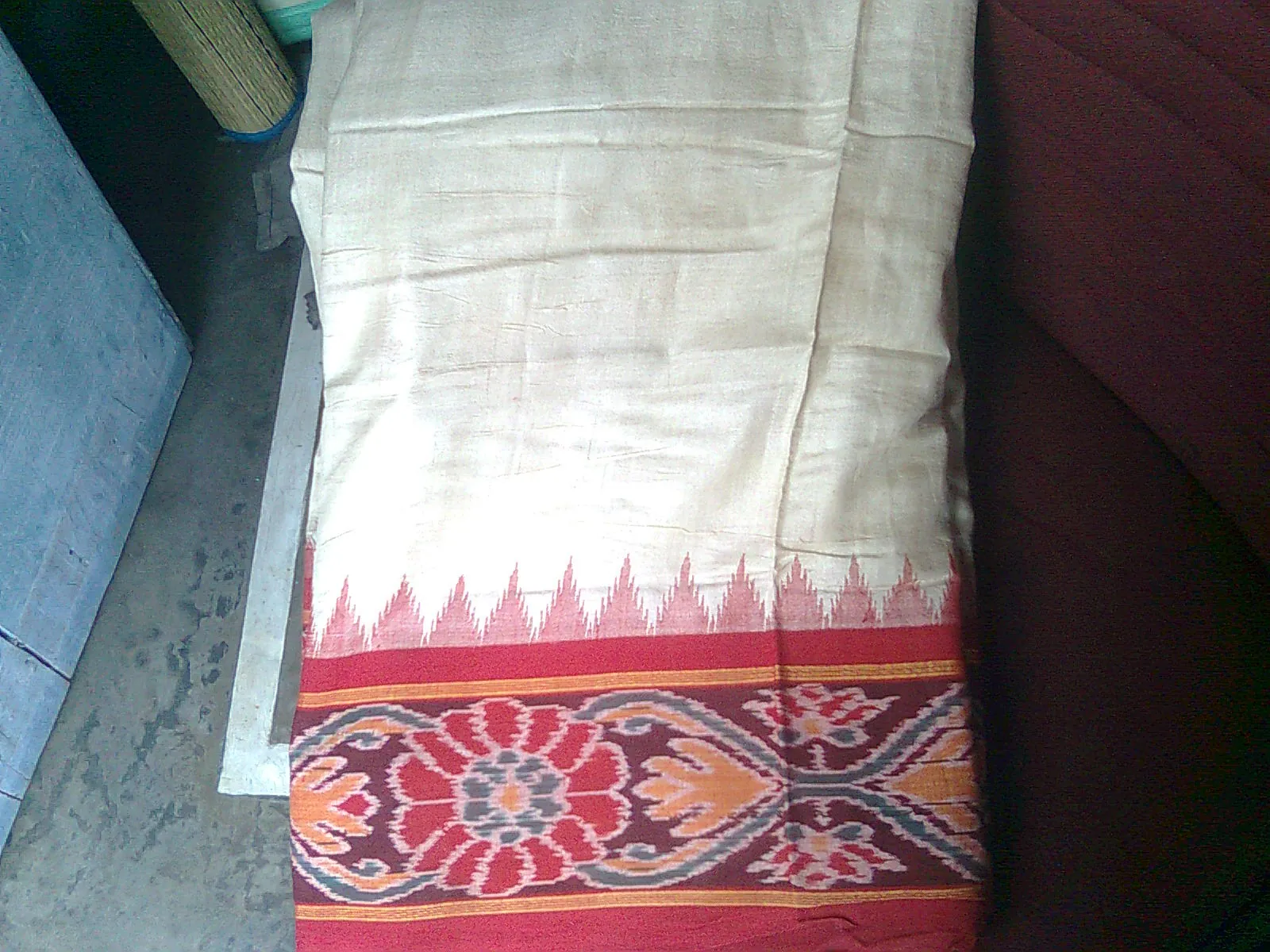 Photo: Nayansatya, CC BY 3.0, Wikimedia Commons.
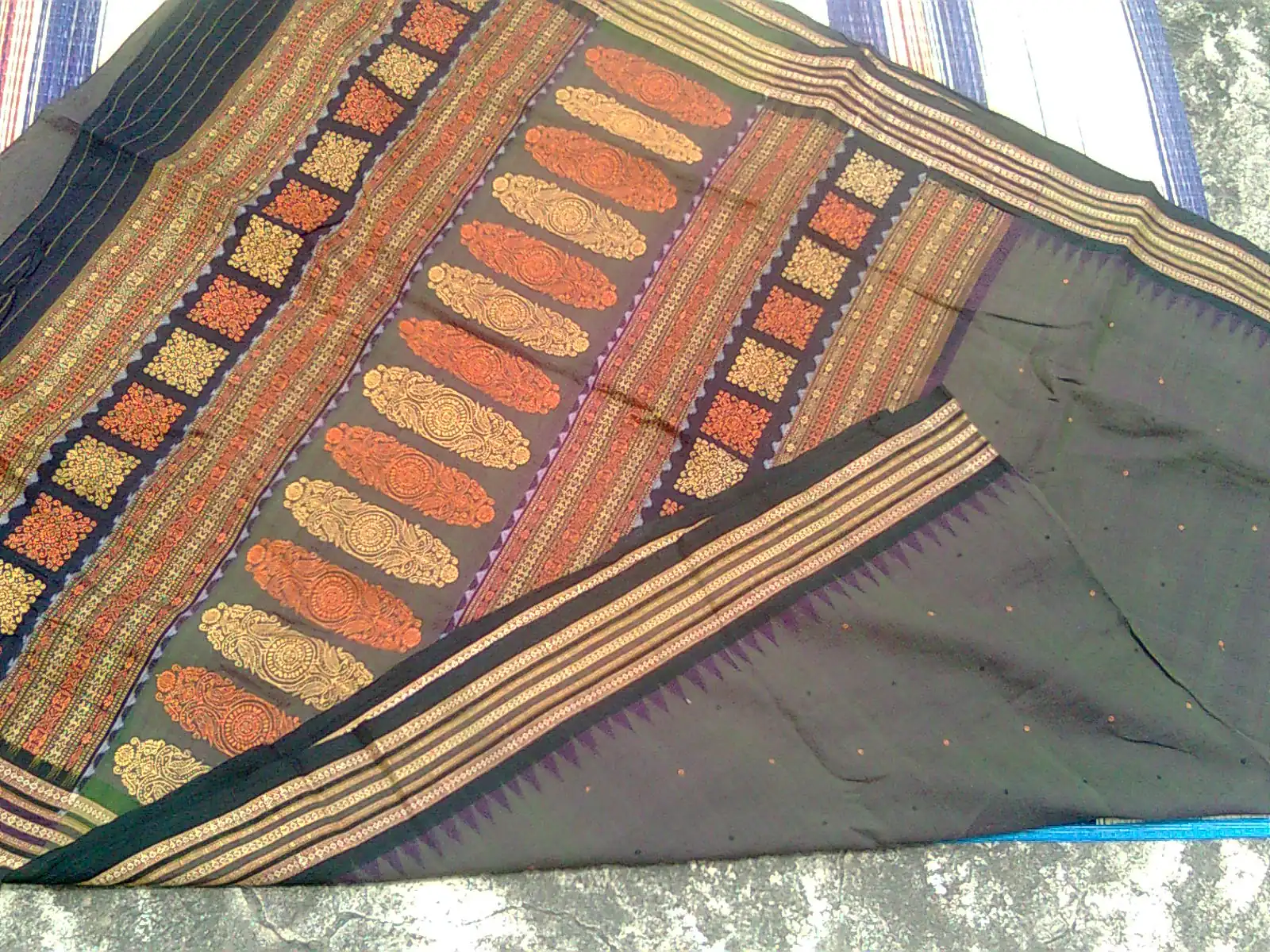 Photo: Nayansatya, CC BY 3.0, Wikimedia Commons.
Sarees of Assam, Bihar and Chhattisgarh
Muga is Assam's golden silk, from a silkworm found only in Assam. It is hard to dye, so it keeps its natural golden colour. It is woven into sarees and into the two-piece mekhela chador, and its GI dates from 2007.
Tussar is a wild silk, uneven in texture and beige to brown in its natural colour. Champa, in Chhattisgarh, has woven it for more than 100 years and has a GI from 2010. In Bihar, the Bhagalpur Silk GI, from 2013, is held by the Bhagalpur Tussar Silk Development Samiti.
How to read a saree listing
A saree's name is a claim about where it was made. Putting a registered GI name falsely on goods from somewhere else can be a criminal offence under the GI Act. The rule also covers a name in an advertisement or price list that a buyer orders from, so a listing that says Kancheepuram Silk is making a claim a seller can be held to. Words such as style, look or inspired after a place name mean the seller is not claiming that origin. A Kanchipuram-style saree may be a good saree, but it is a different product and should cost like one.
A name alone does not prove much, because anyone can type one into a listing. Ask where it was woven and by whom, and look for a label. A Handloom Mark label has a QR code that any QR reader can scan to show the weaver. An India Handloom Brand label carries the maker's registration number, which you can check in the list of registered users on indiahandloombrand.gov.in.
Then look at the back. Many of the India Handloom Brand's checks for telling a weave from a copy are there, as with ikat, jamdani and Ilkal above. How to check an online seller is genuine covers the seller's side.
Price is the last check. A Banarasi-style saree from Surat traders costs ₹450 to ₹1,250 at wholesale, and a handloom Banarasi from Varanasi ₹1,750 to ₹11,000, as what to sell in India's wedding season found.
Selling on Sagazo
If you weave sarees or sell them, you can sell them on Sagazo. Listing is free and there is no commission, so a handloom Banarasi you sell for ₹1,750 pays you ₹1,750. Put the weave and the town in the listing, add the label number if the saree has one, and photograph the back and the pallu, which is where this guide tells buyers to look. Our post on selling sarees from home covers sourcing and packing.
Tell us about your shop on the become a seller page and we will help you get set up.
Once your shop is open, the help centre explains the product details table, where a saree's fabric and length go, and taking product photos.
Sarees on Sagazo
The sarees listed on Sagazo show what sellers have up so far. Each listing names the shop that sells it, and the checks above are yours to make there as anywhere else: read the weave and the town in the listing, ask about a label, and ask for a photo of the back.